Wondering how to make your home work harder for your job without making it feel like an office building? If you live in Vancouver, WA, that question is more relevant than ever. Whether you are buying, selling, or updating a home, the right remote-work setup can improve your day-to-day comfort and make a property more appealing in today’s market. Let’s dive in.
Why Remote-Work Design Matters in Vancouver
Remote and hybrid work are still a major part of how people live. The U.S. Census Bureau reports that 13.8% of workers usually worked from home in 2023, up from 5.7% in 2019. That shift has changed what many buyers want from a home and what many sellers should highlight before listing.
In Vancouver, strong home connectivity supports that demand. Census data shows that 97.1% of city households have a computer and 93.4% have a broadband subscription. In Clark County, those numbers rise to 97.5% and 94.5%, which tells you that reliable internet access is a practical part of everyday life for many households here.
Commute times also shape the conversation. Mean travel time to work is 23.2 minutes in Vancouver and 24.8 minutes across Clark County. Even if you only work from home part of the week, a comfortable and functional office can make those in-between days much easier.
Start With a Flexible Floor Plan
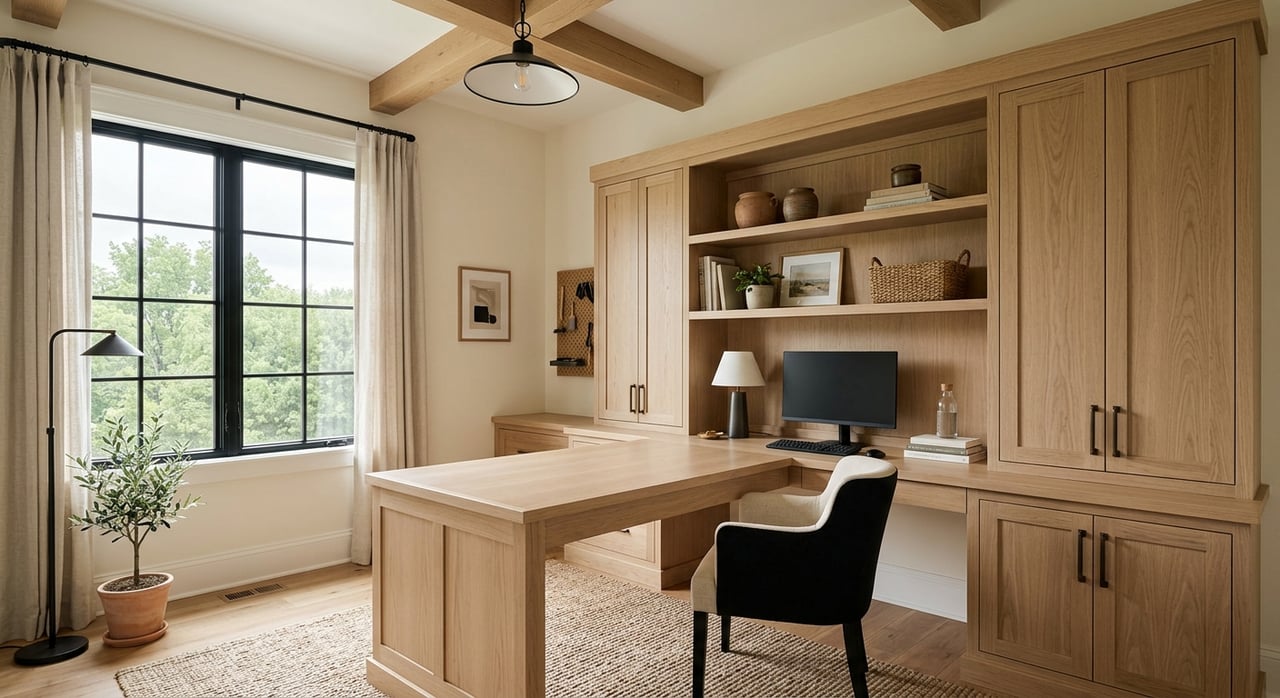
The best remote-work space is often the one that gives you real separation from the rest of the home. A dedicated room with a door is usually the simplest solution because it helps with focus, calls, and work-life boundaries. If a full office is not available, a bonus room, loft, finished basement, or secondary bedroom can also work well.
In Vancouver, this matters even more because people often spend more time indoors during wetter months. A space may look good in listing photos, but the real question is whether it feels usable all day. You want a room that can support quiet work, video meetings, and normal household activity happening elsewhere.
If you are buying, pay close attention to how the office area connects to the rest of the house. Open layouts can feel airy, but they are not always ideal for concentration. If you are selling, clearly showing how a flexible room can function as a true workspace may help buyers picture the home more easily.
Plan for Quiet and Privacy
Noise can make a home office frustrating fast. OSHA notes that office noise can interfere with speech and distract from mental tasks, which is especially important if your day includes calls, meetings, or detailed work.
That is why room placement matters. A workspace farther from the kitchen, play areas, garage doors, and street-facing windows will usually perform better than a desk set up in the middle of the main living area. Privacy also matters on video calls, especially if more than one person is home during the day.
Simple materials can help too. Rugs, soft furnishings, and doors that close can reduce echo and improve sound control without a major remodel. If you are preparing to sell, these small changes can make the space feel more finished and functional.
Make Lighting Work for You
Lighting is one of the most overlooked parts of a home office. In the Vancouver area, it deserves more attention because winter light can be limited. Historical sunshine records at Portland Airport, a useful regional reference, show January at just 28% of possible sunshine compared with 69% in July.
That seasonal swing means daylight access matters, but so does control. OSHA recommends placing a computer screen perpendicular to windows and using blinds or drapes to reduce glare. Task lighting and diffuse lighting can also help reduce eye strain and headaches.
When you tour homes, notice where the windows are and how the room feels at different times of day. A bright room is helpful, but not if direct light hits your monitor for hours. If you already own your home, adjustable window coverings and better desk lighting are often smart upgrades that improve comfort right away.
Think About Comfort Year-Round
A remote-work room should feel good for long stretches, not just look attractive in photos. That includes temperature, airflow, and general comfort across the seasons. In the Portland-Vancouver area, nearby NOAA climate data shows average temperatures ranging from about 47.5°F/36.2°F in January to 82.3°F/58.9°F in August.
That seasonal range can affect how usable a workspace feels throughout the year. OSHA notes that ventilation and humidity can affect comfort and productivity, and desks should not sit directly under vents blowing air onto the user. If a room is too hot in summer or too chilly in winter, it may not function well as a daily office.
When evaluating a home, ask yourself whether the office space can stay comfortable during a full workday. A beautiful corner setup is much less appealing if it gets stuffy, drafty, or overly bright. Buyers tend to notice this quickly once they imagine real daily use.
Verify Internet at the Exact Address
For remote work, internet service is not something to assume. It should be verified at the exact property address. The FCC National Broadband Map can show whether fiber, cable, DSL, satellite, or fixed wireless service is reported for a location, and Washington Commerce encourages residents to verify or challenge inaccurate availability or speed information.
This step matters because online listings and neighborhood assumptions do not always tell the full story. If your work depends on strong upload and download speeds, address-level confirmation is worth the extra effort. It is one of the most practical parts of a remote-work home search in Vancouver.
Once your setup is in place, basic network security also matters. The FTC recommends changing default router settings, using a unique network name and password, enabling encryption, keeping devices updated, and using a guest network when appropriate. That is especially helpful if your home office includes printers, webcams, smart devices, or regular video calls.
Use Outdoor Space Seasonally
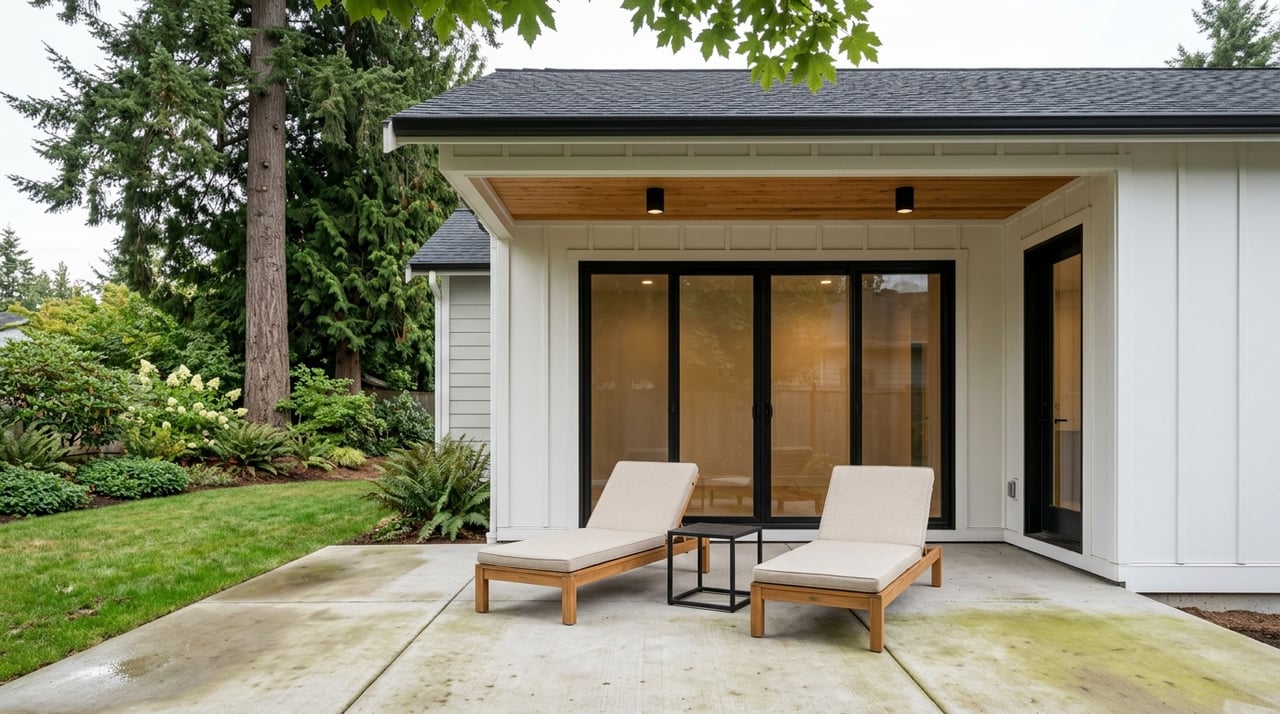
In the right season, outdoor work areas can be a real bonus. Covered patios, porches, and balconies can offer a change of scenery and a useful backup workspace when the weather cooperates. In the Vancouver area, nearby NOAA records show that November through January are the wettest months, while July and August are much drier and warmer.
That pattern makes seasonal planning important. A patio is most useful when it offers cover from rain, some shade, and access to power or charging. In summer, those features can turn a simple outdoor space into a comfortable work zone for part of the day.
For sellers, a usable deck or covered patio can support the remote-work story of the home. For buyers, it is worth thinking about how often you would realistically use the space, not just how nice it looks during a showing.
What Sellers Should Highlight
If you are selling a home in Vancouver, remote-work features are often worth presenting clearly. Buyers are not just looking for square footage. They want homes that support real daily routines with less stress and more flexibility.
The most marketable upgrades are usually easy to understand at a glance:
- An enclosed office or flex room
- Better task and overhead lighting
- Quieter finishes like rugs or soft materials
- Verified broadband availability
- A functional patio, deck, or covered outdoor area
These improvements line up with what many buyers actually need. They also photograph well and help your home feel more purposeful during showings.
What Buyers Should Look For
If you are shopping for a remote-work friendly home, a few questions can help you cut through the noise quickly. Focus on how the space functions, not just how it is labeled.
Ask yourself:
- Can the office close off from the rest of the home?
- Does the room get good daylight without screen glare?
- Is broadband service truly available at this address?
- Is there enough storage to keep work equipment organized?
- Is there a covered outdoor area that could work in dry weather?
These details can make a big difference in how a home feels after move-in. A thoughtful setup can support productivity, reduce daily friction, and give you better separation between work and home life.
A Local Rule to Keep in Mind
If a home office is also used for a home-based business, there may be an extra local consideration. The City of Vancouver says some residences may need a Home Occupation Permit under VMC 20.860. The city also notes that businesses may need state registration and either a valid City of Vancouver business license or an exemption.
This is especially relevant if the space is used for client meetings, side-business activity, or anything beyond a simple employee workstation. The city’s goal is to allow small-scale business use while keeping it subordinate to residential use and non-disruptive to neighbors.
For homeowners and sellers, that means it is smart to think carefully about how a workspace is described and used. A quiet, low-impact home office is different from a client-heavy commercial setup.
A remote-work friendly home in Vancouver is not about trendy furniture or a perfect social media backdrop. It is about having the right mix of layout, comfort, light, privacy, and connectivity for the way you actually live. If you want help finding a home that fits your work-life routine, or preparing your current home to appeal to today’s buyers, Joy Johnson offers the kind of thoughtful, hands-on guidance that can make the process feel much more manageable.
FAQs
What makes a home remote-work friendly in Vancouver, WA?
- A remote-work friendly home in Vancouver usually includes a space that can close off from the main living area, useful daylight with glare control, reliable broadband access, and comfortable year-round conditions.
Why is internet verification important for Vancouver homebuyers?
- Internet service should be checked at the exact address because reported service levels can vary by property, and strong connectivity is a key part of a functional work-from-home setup.
How does Vancouver weather affect home office design?
- Vancouver’s wetter fall and winter months, drier summers, and changing daylight levels make indoor comfort, controllable lighting, and seasonal outdoor workspace options especially useful.
Should sellers in Vancouver stage a room as a home office?
- If the layout supports it, staging a room as a home office can help buyers understand how the home fits remote or hybrid work needs.
Do home offices in Vancouver need a permit?
- A basic employee workstation may not raise issues, but if the office is also used for a home-based business, some properties may need a City of Vancouver Home Occupation Permit and related business compliance.